













 |




|
CSA Program
|
|
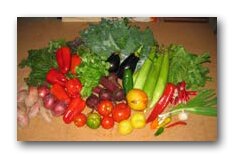
Crown Point is a proud participant in a national trend towards eating locally. We have an 207-family Community Supported Agriculture (CSA) project that links consumers directly to our farm and the produce we grow. Families pay a flat fee in the beginning of the year, typically when the farmers need the money the most for purchasing seeds, supplies, and hiring help. In exchange for this support, the "Sharers" receive a weekly bag of freshly harvested certified organic produce throughout the harvest season. Click here to download the "CSA at Crown Point" brochure.
Community Supported Agriculture can trace its roots to groups of consumers in Japan in the late 1960's who were concerned by the declining quality of produce available to them. They noticed that their food was coming from farther and farther away and were growing more wary of the effects of the chemicals that were being used to produce their food. These groups sought out local farmers and pledged to support them in order to receive the best and freshest portions of their harvests. They felt that this was the best way to assure themselves a diet of the highest quality, unadulterated foods. Today, CSA is a successful model for a farmer/consumer relationship that asks the consumer(s) to support a local farm in a very committed way by paying for a season's worth of farm products before the harvesting ever begins. Some CSA farms also require the "sharers" to help with the farm work for a number of days throughout the season. Having received the sharer's commitment, the farmers then commit themselves to providing each sharer a portion of the season's harvest, doing all they can to provide as much diversity and quality to the sharers as they can. These portions are typically distributed The vast majority of CSA farms produce their food organically, as they are usually run by farmers with a dedication to a healing method of farming and/or have a personal dislike of handling agricultural chemicals. Many farms will be Certified Organic, meaning they have been audited by an accredited third party inspection agency.
The CSA model has proven itself to be beneficial to both the farmer and the CSA sharer. The sharer receives:
The farmer receives:
Challenges and Rewards of the CSA Sharer
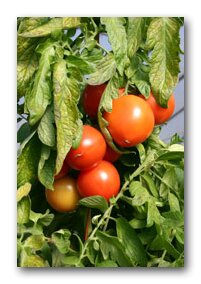
CSA sharers make more than a financial commitment to a particular farm. They also make a real commitment to eating a diverse array of vegetables on a seasonal basis. Some unusual vegetables can create challenges for the cook. Tips are often provided in a weekly farm newsletter, but still a need to be creative is often forced on the sharer. Many come to appreciate this, and many are pleasantly surprised to find new, loveable vegetables they may have never tried otherwise. The harvest reflects what is available seasonally, and at times there are a lot of vegetables in the shares. The sharer needs to have the time to put by some produce that s/he will not get to right away.
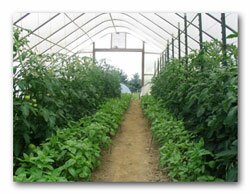
Sharers become more connected with the food and land and people that worked to grow the food. By eating a seasonal palette of vegetables, and eating what the land and weather provides, they learn firsthand that a turning of the weather can affect the quality and production of their favorite vegetables. Overall, CSA sharers come to appreciate that modern food is available as it was always meant to be - fresh and healthy and very tasty. Winter Shares for CSA For the past four years, Crown Point CSA sharers (Community Supported Agriculture) have had the option of a winter share that provides vegetables for the Thanksgiving and Christmas holidays. Stored root vegetables -- some usual and some unusual -- comprise the bulk of the shares with winter squash and greens from the high tunnels adding color and a sense of the fresh. |
 each week of the harvest season, which can last from 20-52 weeks of the year, depending on the location of the farm. (Think 52 for California and the other extreme for Quebec.)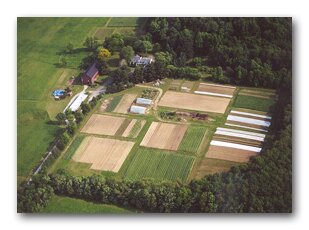
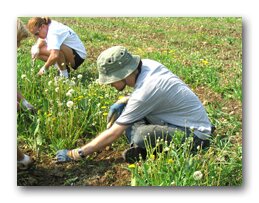
 Sharers with children need to find ways to make the vegetables appealing to them. At the same time, those with children find that belonging to a CSA is a positive influence for the children. The visits to the farm open their eyes to new experiences, and makes the food-farm connection a strong one in their minds. They may start asking if the food they are eating is from "their farm."












| ©2007 All Rights Reserved - Crown Point Ecology Center - Integrated Design by |  |



